Earthshot 2026
Earthshot in Mumbai: electric rickshaws, royals and a kingdom of forests
The Earthshot Prize in BKC: Mahindra’s electric rickshaws, Bhutan’s forests and the royal visit.
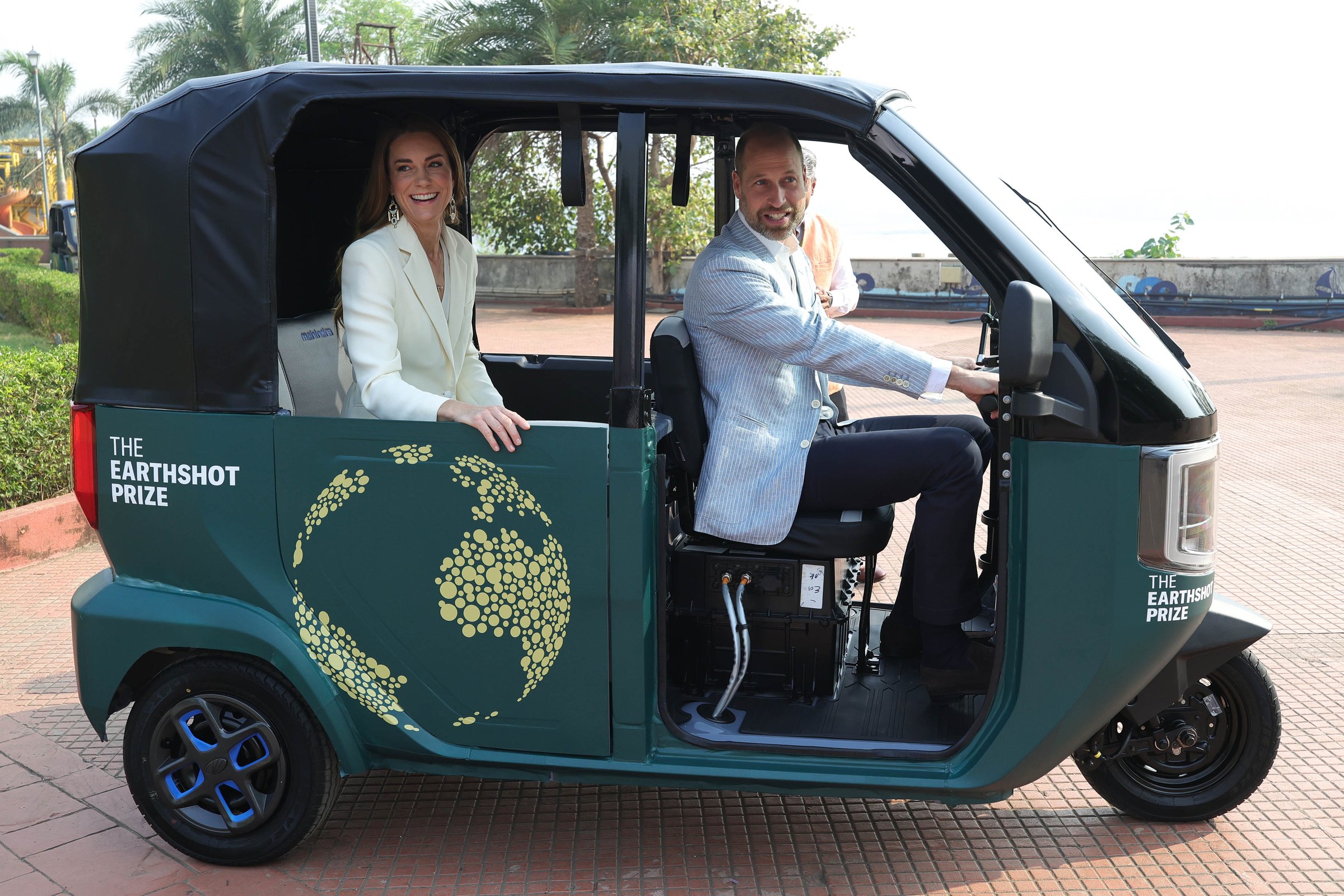
Photo Credit
Image courtesy of © Andrew Parsons / Kensington PalaceOn 17 November 2026 the Earthshot Prize came to India for the first time, at the Jio World Convention Centre in Bandra Kurla Complex. Karan Johar hosted, Sachin Tendulkar handed Mahindra its £1 million, the Princess of Wales crowned Bhutan, and a million schoolchildren had their own awards. Here is who won, why it matters to Mumbai, and what to ask next.
A green carpet in BKC
On the evening of 17 November 2026 the Jio World Convention Centre in Bandra Kurla Complex rolled out a carpet in a colour Mumbai rarely associates with its traffic: green. Five thousand guests walked it for the sixth Earthshot Prize, the environmental award founded by Prince William, and the first held in India. The organisers called it their biggest Awards Night yet.
For a city that counts its days in commute times and its air in AQI readings, optimism was an unusual thing to host. Mumbai hosted it with style.
The idea is simple to describe and hard to win. Each year five winners, one for each of the prize’s five ‘Earthshots’ (Protect and Restore Nature, Clean Our Air, Revive Our Oceans, Build a Waste-Free World and Fix Our Climate), receive £1 million each. This year’s fifteen finalists were chosen from nearly 7,000 nominations in 169 countries.
London, Boston, Singapore, Cape Town and Rio de Janeiro hosted the earlier ceremonies; Mumbai now joins them.
Who walked, who sang
The host was Karan Johar, film-maker and the face of The Traitors India, which may make him the only presenter alive equally at home with a love triangle and a carbon budget. The winners were announced by Sachin Tendulkar, Alia Bhatt, Sonam Kapoor and the Academy Award winner Rami Malek, with two Earthshot Ambassadors: the Australian conservationist Robert Irwin and the South African actor Nomzamo Mbatha.
The music was a Mumbai and London double bill. The Earthshot Orchestra, led by the Mumbai composer and pianist Merlin D’Souza, opened with The Chemical Brothers’ ‘Galvanize’, joined by Wild Wild Women, India’s first all-female hip hop collective. Shreya Ghoshal sang, the British actress and musician Simone Ashley performed, and Take That played in India for the first time.
The young composer Shashwat Sachdev, a two-time National Film Award winner, brought the night to its finale.
The royal couple dressed for the city. The Princess of Wales wore a vermilion Anarkali by Mahima Mahajan, in handwoven silk georgette with Banarasi gold detailing, coloured with vegetable-based dyes, according to the Press Association, with a diamond and emerald tassel suite that once belonged to Queen Elizabeth II. The Prince wore a bespoke bandhgala with hand-embroidered buttons by Manish Malhotra, made in India.
On a night about sustainability, it was a graceful compliment to India’s hand-made textiles.
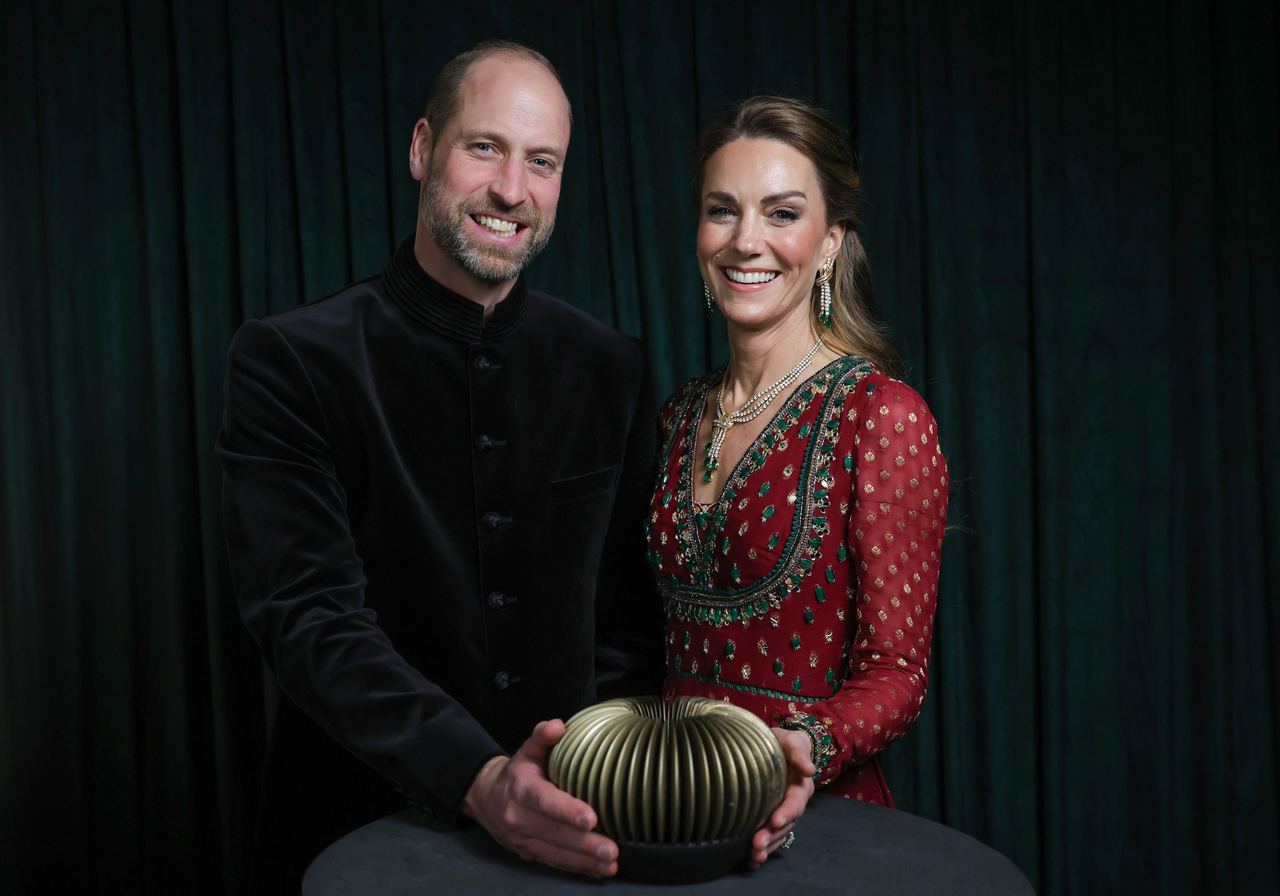
Photo Credit
Image courtesy of © Andrew Parsons / Kensington PalaceClean Our Air: the rickshaw wins
For Indian readers the headline was Clean Our Air, won by Mahindra Last Mile Mobility. Sachin Tendulkar presented the award to the company’s managing director and chief executive, Suman Mishra. It honours a vehicle every Mumbaikar has ridden in and few have thought about: the three-wheeler. Around 90% of India’s small three-wheelers and vans are used commercially, Earthshot notes, so nobody can simply take them off the road. For millions of drivers, the vehicle is the livelihood.
Mahindra’s answer has been to make electric pay. The company has sold more than 400,000 electric last-mile vehicles, over 100,000 of them in a single year, and reports that those sales have avoided more than 180,000 tonnes of CO₂. It has trained 500 women to drive and repair electric three-wheelers, and Earthshot says lower running costs can lift a driver’s take-home income by 25 to 30%.
The prize will help speed the rollout in Mumbai, Ahmedabad, Bengaluru and Delhi, where parking, charging points and policy are the hurdles.
The Prince and Princess had tested the product that morning. The Prince drove one of the company’s three-wheelers with the Princess as his passenger and, the Press Association reported, joked about not crashing it. Anyone who has taken an auto through Bandra at rush hour will appreciate the modesty of the ambition.
India had a second finalist, too: Mahila Housing Trust, which paints roofs white to cool homes and offers affordable insurance so that low-income pregnant women need not work in extreme heat.
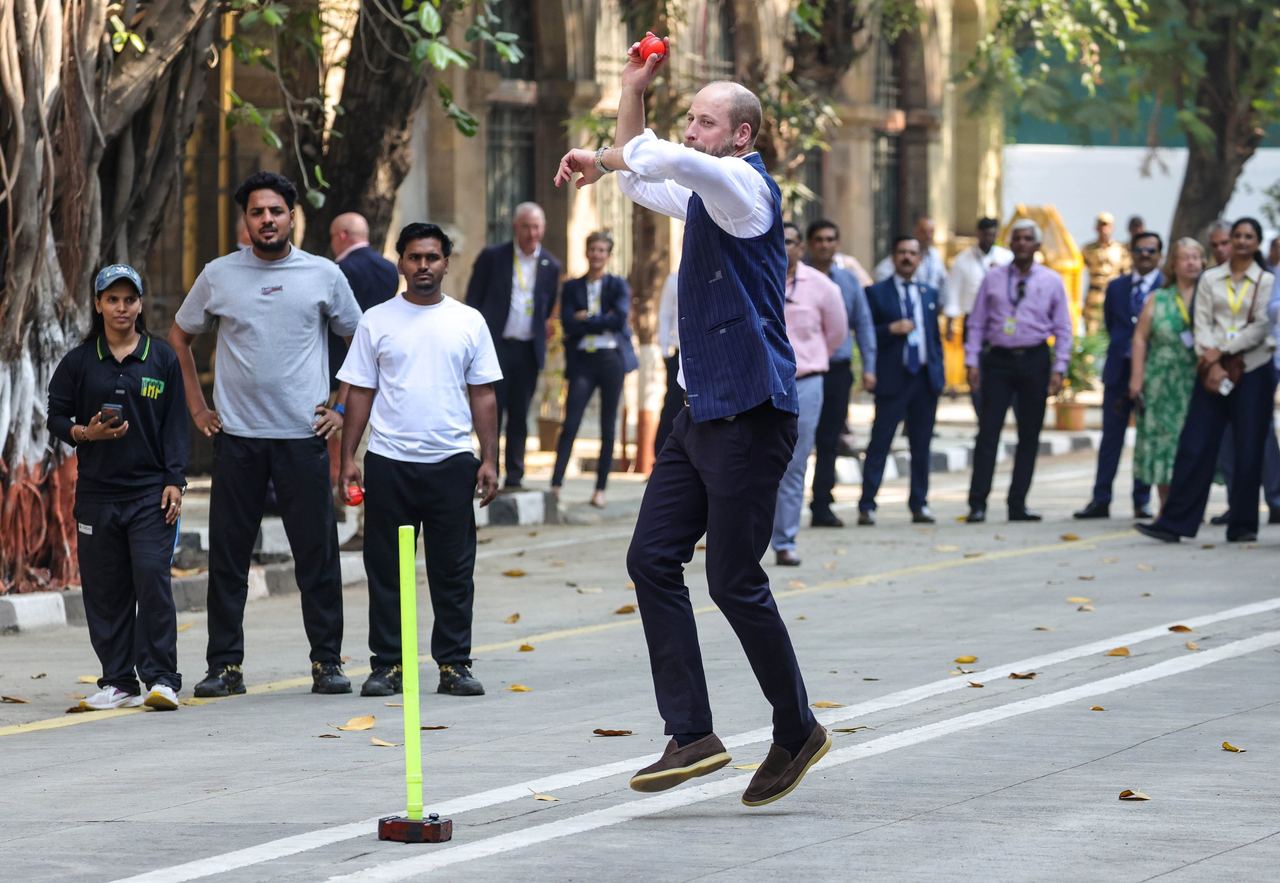
Photo Credit
Image courtesy of © Andrew Parsons / Kensington PalaceIs the humble auto a tipping point in disguise? Earthshot says Mahindra’s electric three-wheelers helped push their category past 50% of new sales in India, the country’s first vehicle segment to get there. If the vehicle that carries the last mile of almost every journey can go electric first, buses and two-wheelers may follow faster than the forecasts assume. The company’s stated ambition is one million electric vehicles on India’s roads.
The tipping-point test
This was the first year in which the science of positive tipping points shaped the choice of winners in all five categories, drawing on work with the University of Exeter. The question is not simply whether a project is good, but whether it can reach ‘the moment when change starts to fuel itself’. It is a demanding test, and a useful one for any city.
Which of Mumbai’s green experiments would keep going without a sponsor, and which are waiting for a nudge?
A kingdom of forests: Bhutan
The night’s final award, Protect and Restore Nature, went to an entire country. Bhutan, a Himalayan kingdom of about 800,000 people, has written the protection of nature into its constitution, which requires at least 60% of its land to stay under forest, forever. It actually keeps nearly 70%, protects more than half its land, and absorbs more carbon than it emits.
Few nations have turned a planning target into a constitutional promise; fewer still have overshot it.
A nation of 800,000 helping to secure the water of nearly a fifth of humanity.
Why should Mumbai care about forests so far north? Because they regulate the Himalayan water systems that around 1.6 billion people downstream across South Asia depend on: a nation of 800,000 helping to secure the water of nearly a fifth of humanity. The pressure is real. Nearly 2,000 of Bhutan’s water sources are drying, and forest fires affected almost 18,000 hectares of the country between 2021 and 2024.
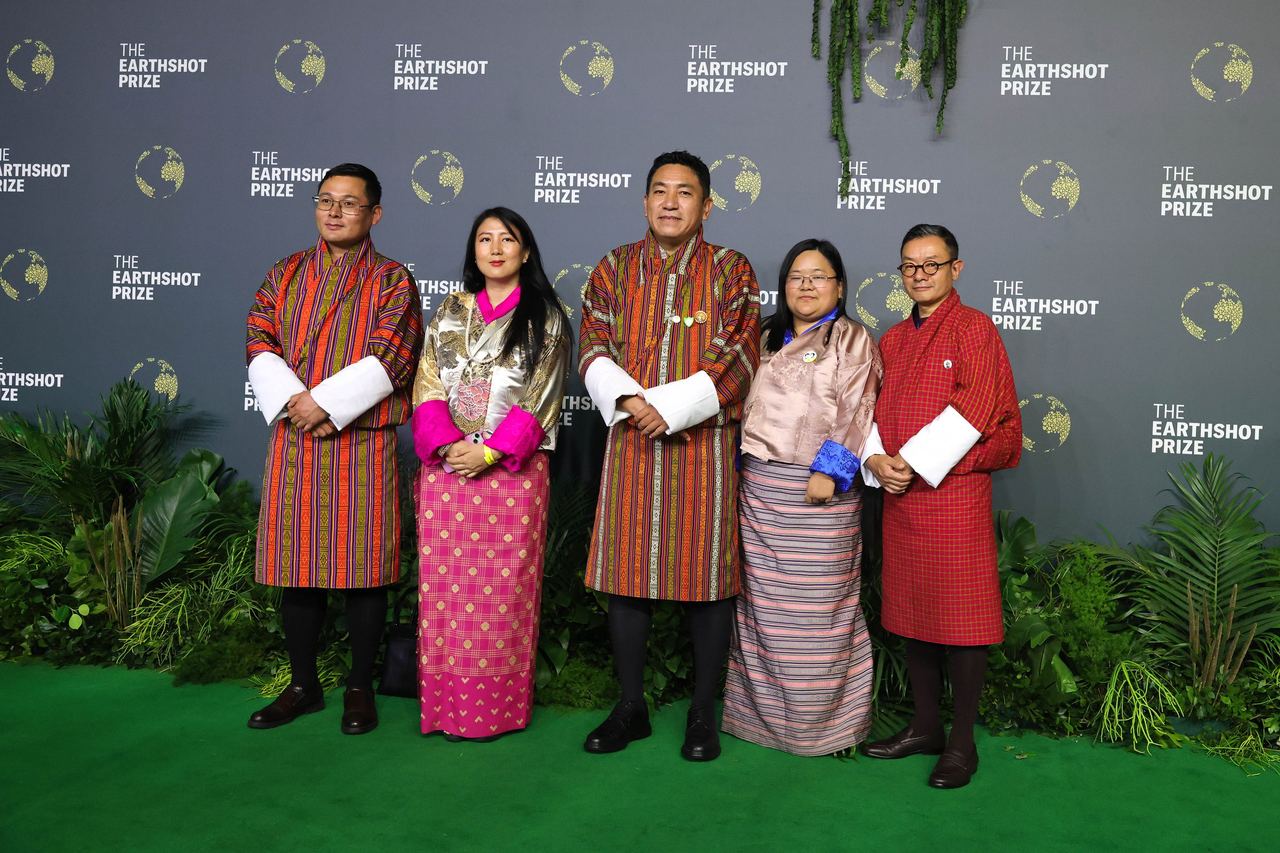
Photo Credit
Image courtesy of © Andrew Parsons / Kensington PalaceThe £1 million will help Restore Bhutan, the national nature coalition launched by the Royal Government in 2025, which aims to restore 50,000 hectares of degraded forest, farmland and urban land by 2030, saving nearly 2 million tonnes of CO₂ and securing 133 billion litres of water.
Bhutan traces the work to the Fourth King, His Majesty Jigme Singye Wangchuck, who placed conservation at the heart of development, and to His Majesty King Jigme Khesar Namgyel Wangchuck, who carries it forward; the philosophy behind it, Gross National Happiness, has guided the country since the 1970s.
The Princess of Wales made a surprise appearance on stage to present the award, with a rare short speech. ‘Fortunately, there is reason for hope,’ she said, adding that the people celebrated that night would ‘inspire and create seismic change that will improve lives for generations to come’. She handed the award to HRH Princess Chimi Yangzom Wangchuck, who accepted for Bhutan.
Earlier, Bhutan’s delegation had walked the green carpet in gho and kira, the national dress.
The other three winners
Ørsted, from Denmark, won Fix Our Climate. Twenty years ago it was one of Europe’s most coal-intensive energy companies; it rebuilt itself around renewable energy, cut its direct carbon emissions by more than 98% and now leads in offshore wind. By 2030 it aims to complete 8.1 gigawatts of new offshore wind, including Hornsea 3 in the UK, which will be the largest single offshore wind farm in the world once it is running.
PFAS-Free France, a cross-party, people-powered movement, won Build a Waste-Free World for its campaign against ‘forever chemicals’, which helped secure France’s 2025 law phasing out many uses of PFAS; it now wants similar bans in five more countries or regions by 2030. Niue Ocean Wide Trust won Revive Our Oceans.
The Pacific island’s 1,700 people protect an area of ocean larger than the United Kingdom, and the scheme has already helped lift fish numbers by 60%.
The Children’s Earthshot
Earlier that day, at the Museum of Solutions, the Prince and Princess attended the first Children’s Earthshot Awards, the finale of the I CAN Earthshot Challenge, run with Brazil’s Alana and Design for Change, the youth movement founded by Kiran Bir Sethi. It reached nearly one million students in 15,000 schools across 24 Indian states, asking children aged 9 to 17 not just to learn about the environment but to act. Robert Irwin and Nomzamo Mbatha hosted, and Simone Ashley presented an award.
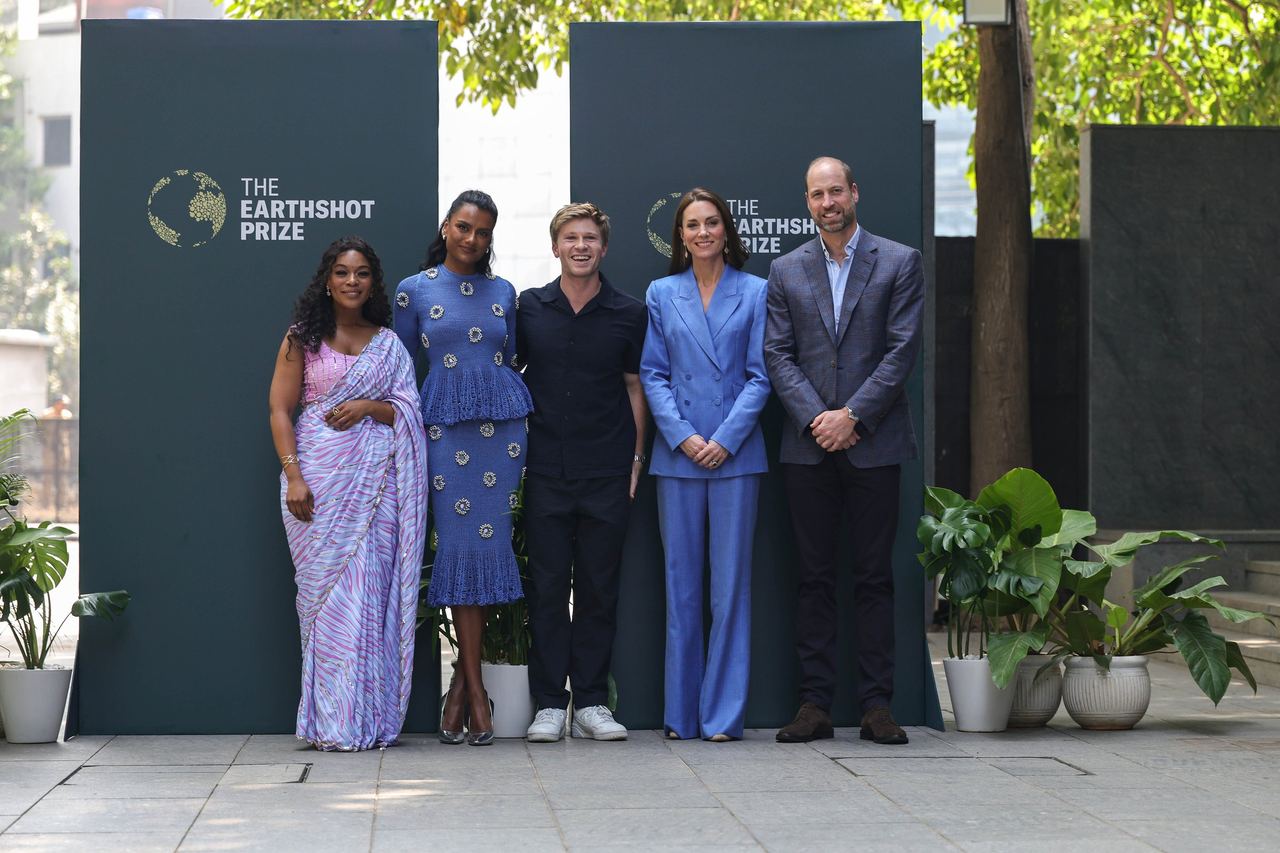
Photo Credit
Image courtesy of © Andrew Parsons / Kensington PalaceThe five winning teams, from Punjab, Maharashtra, Karnataka and Tamil Nadu, each received a US$2,000 grant, and their ideas were wonderfully practical: a low-cost cooling crate that keeps roadside vegetables fresh in extreme heat; oil-free, biodegradable diyas that protect a sacred river from festival pollution; and an air filter made from natural materials for schools and homes near factories.
As Kiran Bir Sethi put it, ‘when children are empowered to take action, the positive impact on their communities is truly limitless’.
Three days in the city
The visit ran over three days. On 16 November the couple went to Ballard Estate in the Fort, a district known for its impromptu gully cricket, where the Prince bowled and batted in the street and the Princess shared a chai with Sachin Tendulkar. The game, Kensington Palace said, has brought communities together across the city and inspired generations of players.
On 18 November they visited the Chanakya School of Craft, which preserves traditional techniques of Indian embroidery and textile-making, and the Princess visited the Nowrosjee Wadia Maternity Hospital.
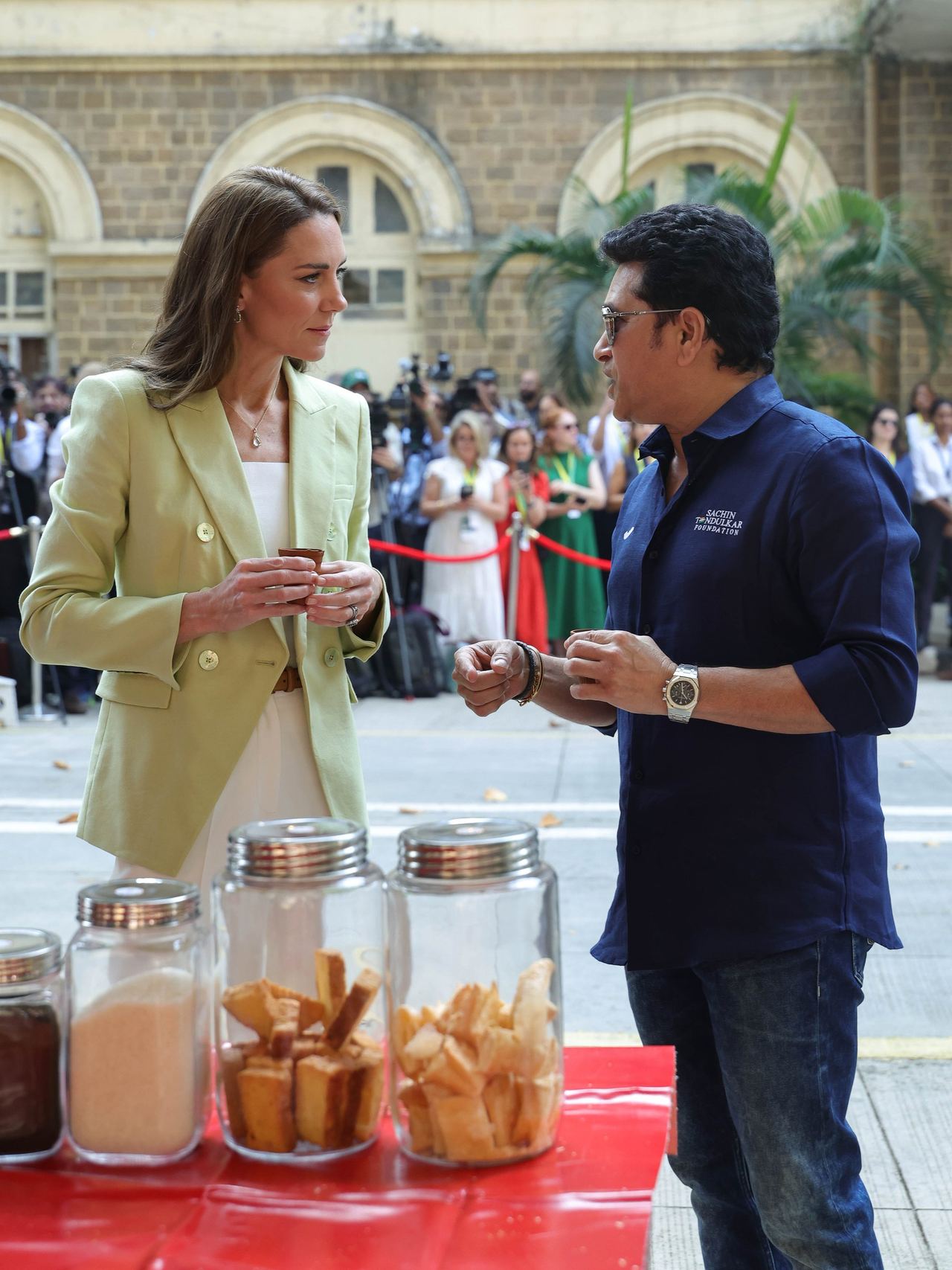
Photo Credit
Image courtesy of © Andrew Parsons / Kensington PalaceIn his speech the Prince spoke directly to his hosts. ‘Here in India, we see one of the great stories of our age unfolding before our eyes,’ he said. ‘Innovators, entrepreneurs, communities and young people are proving that environmental progress and human progress can go hand in hand.’ It was a line written for Mumbai, a city that has never seen much point in choosing between ambition and survival.
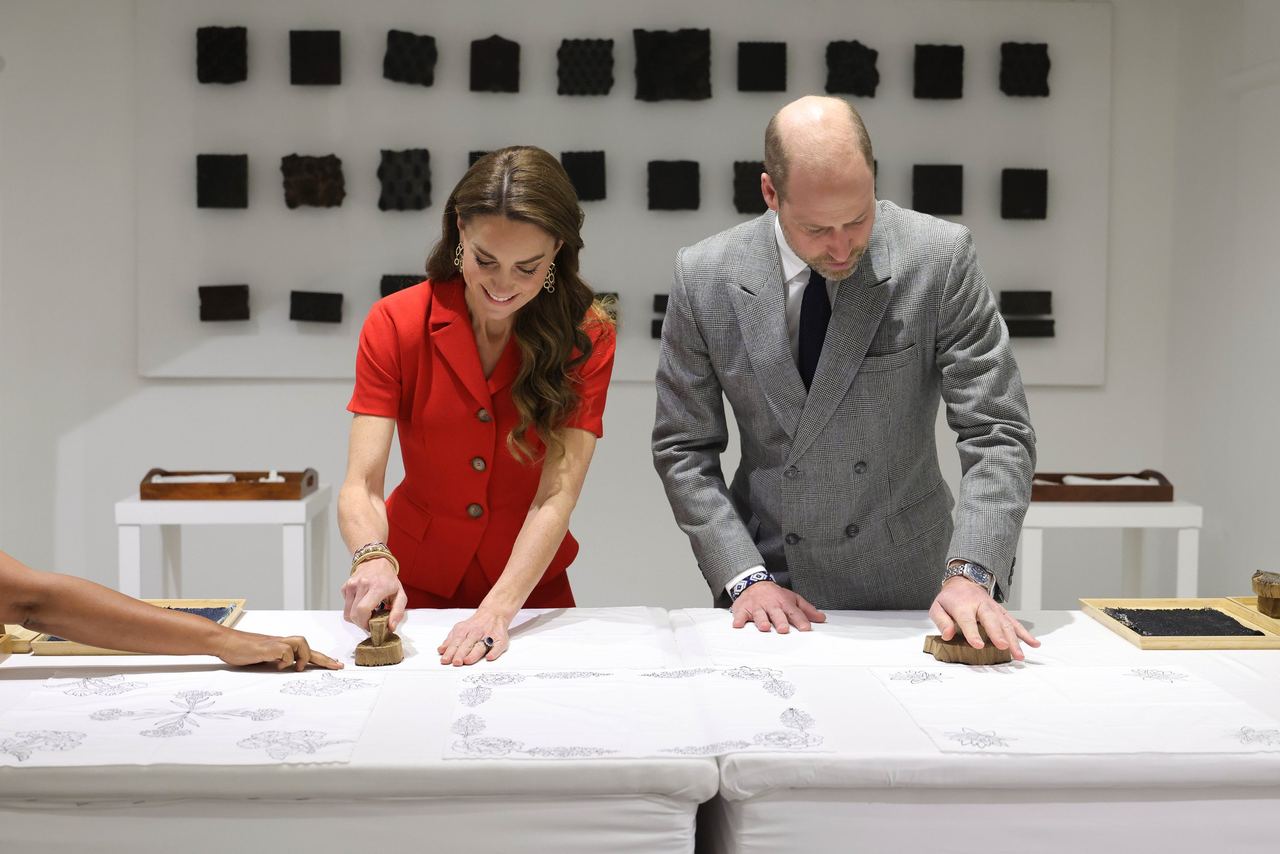
Photo Credit
Image courtesy of © Andrew Parsons / Kensington PalaceWhat the night leaves behind
Awards nights are easy to dismiss: a carpet, a trophy, a stream. The real test comes later. Earthshot says its 75 earlier finalists have together avoided or captured more than 18 million tonnes of CO₂ and improved air quality in regions home to 600 million people. The questions for Mumbai are local ones. Will the electric auto reach the far suburbs as quickly as it reached the red carpet? Will a cooling crate reach the sabziwala on the corner?
And will a city that has argued about its air for years now follow the children who simply built a filter?
‘Change is not only possible. It is already happening,’ the Prince told the hall. The Awards Night streams on Prime Video from 30 November, in more than 240 countries and territories and over 40 languages.
Why it's on our list
- Mahindra’s electric rickshaws win Clean Our Air
- Bhutan: the forest written into a constitution
- Karan Johar, Alia Bhatt, Take That and Shreya Ghoshal
- The first Children’s Earthshot Awards
- Gully cricket, chai and craft with the royals
- The tipping-point test
Location
The map comes from Google Maps, which sets its own cookies once it loads.
More in depth
 The back storyVada pav, Irani cafés and the new tasting menus: how Mumbai eatsVada pav, coastal seafood, Irani cafés and tasting menus.
 The back storyMumbai CuisineVada pav, bombil fry, Irani cafés and Chowpatty chaat.
 The back storyThe dabbawalas: lunch from home to office since 1890The dabbawalas, carrying home-cooked lunches since 1890.